
Sodium Hypochlorite
Structure
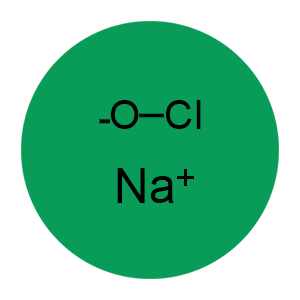
Sodium chloride oxide
Sodium oxychloride
Hypochlorous acid, sodium salt
Formula: NaClO (ClNaO)
Description: Greenish yellow liquid. Disagreeable, sweetish odor.
Uses: Bleaching agent, household & laundry bleaching agent, bleaching agent in paper, pulp, textile indust, disinfectant for glass, ceramics & water, algicide & molluscicide in cooling water for power stations, bleach in alpha-olefin sulfonate production, reactant in hydrazine mfr.
Registry Numbers and Inventories.
| CAS | 7681-52-9 |
| EC (EINECS/ELINCS) | 231-668-3 |
| EC Index Number | 017-011-00-1 |
| EC Class | Corrosive; Contact with acids liberates toxic gas |
| EC Risk Phrase | R:31-34 |
| EC Safety Phrase | S:28-45-50 |
| ENCS (MITI) | 1-237 |
| RTECS | NH3486300 |
| RTECS class | Tumorigen (C); Mutagen (M); Human Data (P); Primary Irritant (S) |
| UN (DOT) | 1791 |
| Merck | 12,8773 |
| Listed on the Toxic Substancs Control Act (TSCA). | |
| Listed on Canadian Domestic Substances List (DSL). | |
| Listed on Australian Inventory of Chemical Substances (AICS). | |
Properties
| Formula mass | 74.44 |
| Melting point, °C | 18 (pentahydrate) |
| Boiling point, °C | 40 |
| Vapor pressure, mmHg | 17.5 |
| Vapor density (air=1) | N/R |
| Density | 1.083 g/cm3 |
| Solubility in water | Miscible |
Hazards and Protection.
| Storage | Keep container closed when not in use. Store in a tightly closed container. Store in a cool, dry, well-ventilated area away from incompatible substances. Refrigerator (approx 4 °C). |
| Handling | Avoid breathing dust, vapor, mist, or gas. Avoid contact with skin and eyes. Do not get in eyes, on skin, or on clothing. Keep container tightly closed. Do not ingest or inhale. Use with adequate ventilation. Use only in a chemical fume hood. Discard contaminated shoes. |
| Protection | Eyes: Wear appropriate protective eyeglasses or chemical safety goggles as described by OSHA’s eye and face protection regulations in 29 CFR 1910.133 or European Standard EN166. Skin: Wear appropriate protective gloves to prevent skin exposure. Clothing: Wear appropriate protective clothing to prevent skin exposure. |
| Respirators | Follow the OSHA respirator regulations found in 29CFR 1910.134 or European Standard EN 149. Always use a NIOSH or European Standard EN 149 approved respirator when necessary. |
| Small spills/leaks | Absorb spill with inert material, (e.g., dry sand or earth), then place into a chemical waste container. Clean up spills immediately, using the appropriate protective equipment. Provide ventilation. |
| Stability | Stable under normal temperatures and pressures. Anhydrous salt is highlt explosive and sensitive to heat or friction. Decomposed by hot water. |
| Incompatibilities | Strong oxidizing agents, ammonium nitrate, methanol, phenylacetonitrile, ammonium oxalate, ethyleneimine, azardine, Reaction with formic acid at 55C becomes explosive. |
| Decomposition | Hydrogen chloride, chlorine, sodium oxide. |
| Other hazards | Solutions are corrosive due to both the chlorine and sodium hydroxide. Corrosive to metals and tissue. |
Fire.
| Flash Point,°C | None | |||
| Fire fighting | Wear a self-contained breathing apparatus in pressure-demand, MSHA/NIOSH (approved or equivalent), and full protective gear. During a fire, irritating and highly toxic gases may be generated by thermal decomposition or combustion. Substance is noncombustible. Oxidizer. Greatly increases the burning rate of combustible materials. Extinguishing media: Use extinguishing media most appropriate for the surrounding fire. | |||
| Fire potential | Nonflammable solution. Solid material may cause fire when brought into contact with organic materials. | |||
| Hazards | Contact with metals may evolve flammable hydrogen gas. | |||
| Combustion products | Releases chlorine when heated above 35 °C | |||
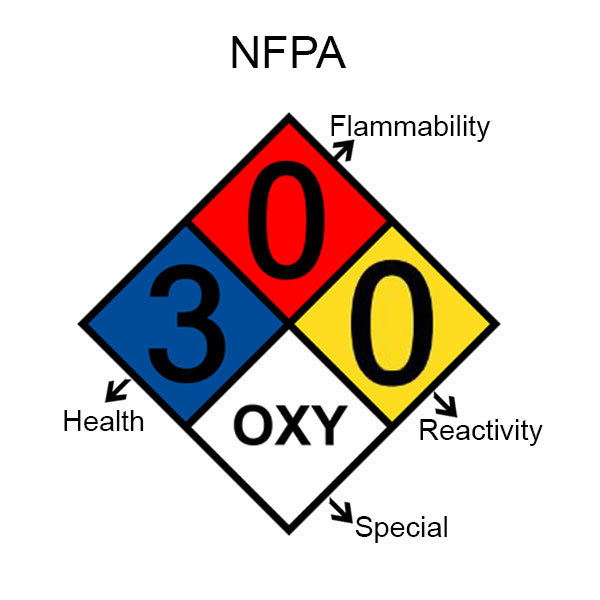
| NFPA | Health:3 Flammability:0 Reactivity:0 Special: 0 | |||
Health
| Exposure effects | Lethargy may develop in patients with significant pulmonary injury after chlorine or chloramine inhalation. Coma is a rare finding after severe ingestion or inhalation. Injecting sodium hypochlorite beyond the root apex during root canal procedures has caused block of the mental nerve. |
| Ingestion | Causes gastrointestinal irritation with nausea, vomiting and diarrhea. Causes gastrointestinal tract burns. |
| Inhalation | Causes chemical burns to the respiratory tract. |
| Skin | Causes skin burns. |
| First aid | |
| Ingestion | Do NOT induce vomiting. Never give anything by mouth to an unconscious person. Get medical aid immediately. Wash mouth out with water. |
| Inhalation | Get medical aid immediately. Remove from exposure to fresh air immediately. If breathing is difficult, give oxygen. DO NOT use mouth-to-mouth respiration. If breathing has ceased apply artificial respiration using oxygen and a suitable mechanical device such as a bag and a mask. |
| Skin | Get medical aid immediately. Immediately flush skin with plenty of soap and water for at least 15 minutes while removing contaminated clothing and shoes. Wash clothing before reuse. Destroy contaminated shoes. |
Transport
| UN number | 1791 |
| Response guide |  154 |
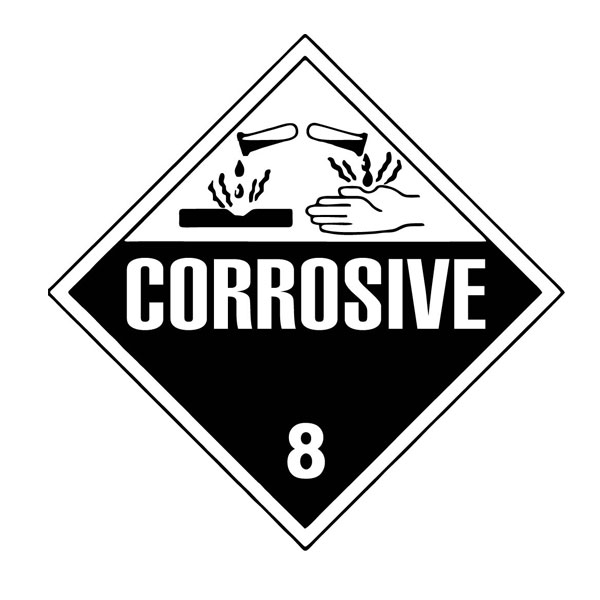
| Hazard class | 8 |
| Packing Group | II; III |
| USCG CHRIS Code | SHP |
| USCG Compatatibility Group | 5 Caustics |